Our Research

DISCOVER OUR ACTIVE PROJECTS

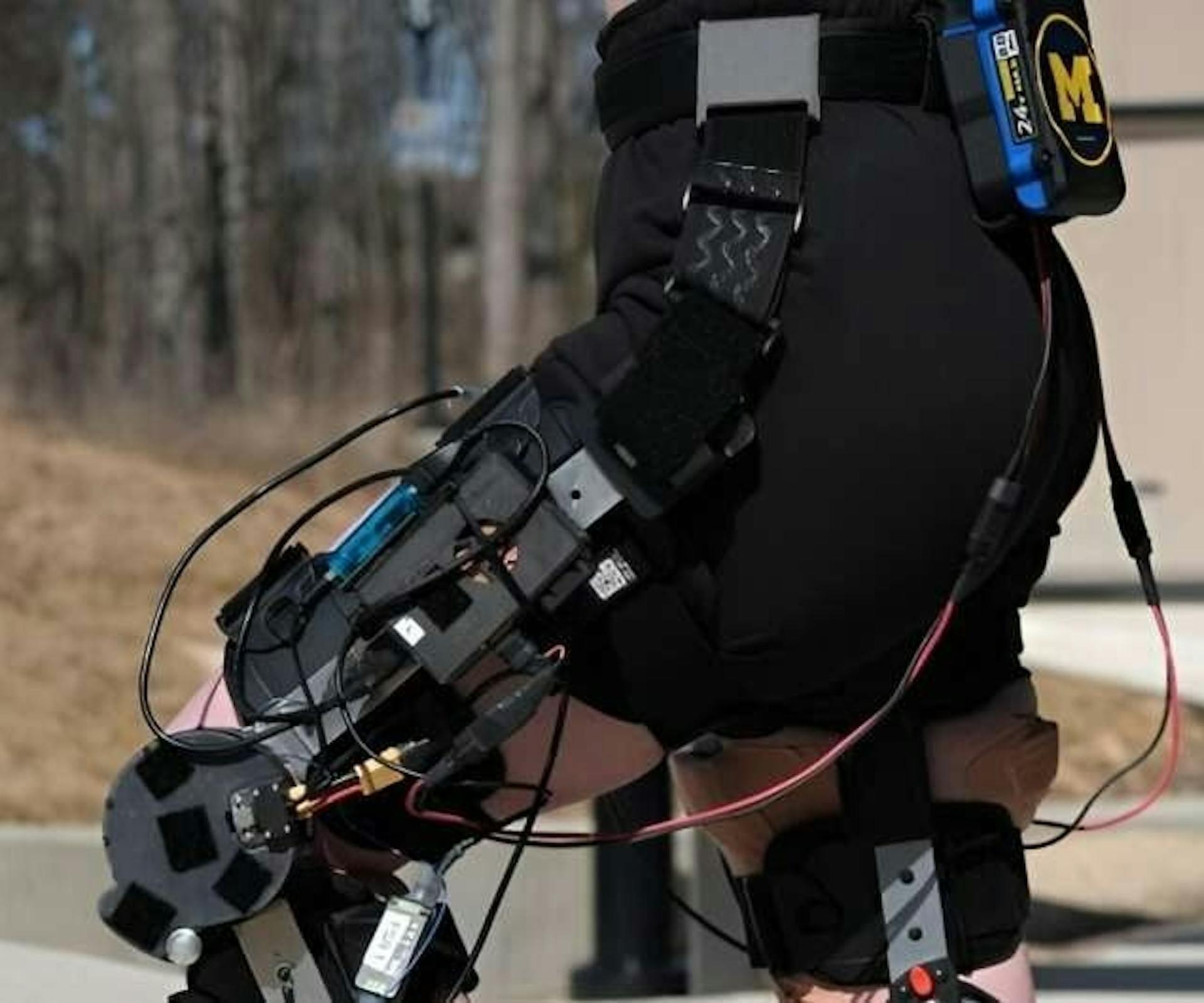
Leg Aid Exoskeleton

The goal of the project is building a wearable robotic device designed to support and enhance walking that combines mechanics, robotics, and bioengineering to reduce fatigue, assist mobility, and explore new possibilities in rehabilitation and performance.

BEA Band

The goal is to create a wearable device for monitoring vital signs (HR, oxygenation, perspiration, temperature, 6-axis accelerometer). It will feature an integrated LLM for data analysis, ensuring all data remains on the user's device to maximize privacy. This semester's focus is to Integrating all components into a single miniaturized PCB.

InVox - Multimodal Silent Speech Interface for wearable glasses

Multimodal wearable interfaces require very low latency acquisition and processing of complex signals (e.g. EMG, IMU, acoustic). This scenario is the ideal terrain for applying open-source TinyML architectures (PyTorch Mobile, TensorFlow Lite) and custom Python pipelines, exactly in line with the technical philosophies of other projects.

EduExo 4.0

During the workshop, participants will be divided into groups and will work on building an exoskeleton for the elbow joint, as well as designing a video game that uses the exoskeleton as a rehabilitation device for the joint. Each group will be responsible for constructing and designing its own exoskeleton; the group that completes the best project in the shortest amount of time will win a prize!

TP24 System

The project concerns the design and development of an electrode system capable of performing TEER (Trans-Epithelial/Endothelial Electrical Resistance) measurements on behalf of the research laboratory of the Cystic Fibrosis Research Foundation. The main approach involves a redesign of the existing ElbaTech setup, which currently consists of 24 electrodes made from Ag/AgCl rods soldered onto a PCB with through-hole vias. These electrodes are then connected, through collectors, to the existing instrumentation capable of acquiring the signal and displaying it via dedicated software.

Python Course - Passion in Action

This course is designed to take students from the basics of Python all the way to the cutting edge of Machine Learning and Secure Federated Learning. It is an intensive program that places interaction at the heart of the learning experience: classroom participation is highly encouraged, and quick, correct answers will be rewarded in tangible, and completely unexpected, ways. From studying Neural Networks to training complex models, the theoretical and practical skills acquired will culminate in an open-topic final project. This allows every participant to get hands-on experience building a complex application of their choosing, provided it is developed in Python.
3D-Printing Course - Passion In Action

This course provides a comprehensive introduction to FDM 3D printing, guiding students through the complete workflow from CAD design to physical prototyping. Participants explore additive manufacturing hardware, such as CoreXY and Cartesian systems, while learning Design for FDM principles to manage constraints like overhangs and tolerances. The experience concludes with a hands-on laboratory session and a group project, providing the necessary skills to independently design and fabricate functional engineering components.

Multimodal Foundation Models and Benchmarking for Psychiatric Clinical Reasoning

A BEA-accelerated thesis! Surgeries require many disposable items with strict expiry dates; manual checks are slow and error-prone. The idea is to build a mobile app where staff can scan a label with the camera, automatically read expiry date + lot number, and store them in a simple local database for tracking and export.

Multimodal Data Pipelines and Explainable AI Visualization in Psychiatry

A BEA-accelerated thesis! Clinicians waste time hunting for critical information across many PDFs. The idea is to build a Retrieval-Augmented Generation (RAG) service that indexes uploaded PDFs and produces a draft discharge summary (with evidence snippets), so clinicians can edit instead of writing from scratch.

PDF-RAG Summariser

Clinicians waste time hunting for critical information across many PDFs. The idea is to build a Retrieval-Augmented Generation (RAG) service that indexes uploaded PDFs and produces a draft discharge summary (with evidence snippets), so clinicians can edit instead of writing from scratch.

Surgical consumables expiry date scanner

Surgeries require many disposable items with strict expiry dates; manual checks are slow and error-prone. The idea is to build a mobile app where staff can scan a label with the camera, automatically read expiry date + lot number, and store them in a simple local database for tracking and export.

Our Archive

PAST, COMPLETED PROJECTS

Leg Aid Exoskeleton

The goal of the project is building a wearable robotic device designed to support and enhance walking that combines mechanics, robotics, and bioengineering to reduce fatigue, assist mobility, and explore new possibilities in rehabilitation and performance.

BEA Band

The goal is to create a wearable device for monitoring vital signs (HR, oxygenation, perspiration, temperature, 6-axis accelerometer). It will feature an integrated LLM for data analysis, ensuring all data remains on the user's device to maximize privacy. This semester's focus is to Integrating all components into a single miniaturized PCB.